

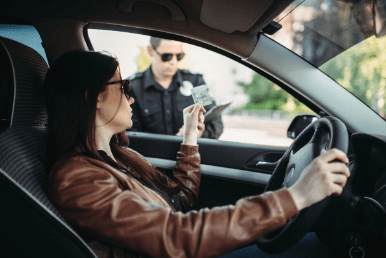
You are driving home through Cincinnati late on a Friday night when traffic suddenly slows, and you see flashing lights ahead, a row of cones, and an officer waving cars into a line. Your heart rate jumps as you realize you are heading straight toward an OVI/DUI checkpoint. You start running through the night in your head, wondering how much you had to drink and what you are required to do when you pull up to the officer.
That tense feeling is exactly what many local drivers experience around big events, holidays, and busy weekends. Some people make it through with a quick conversation and drive away. Others are asked to pull over, step out, take tests, and suddenly find themselves in handcuffs, facing an OVI charge. In the middle of all this, most drivers are unsure what their rights really are or whether the checkpoint is even legal.
At Shark Law Firm, we have spent more than two decades defending people in Cincinnati courts, and a significant part of our work involves DUI and OVI cases that begin at checkpoints. Shane “The Shark” Herzner is a former Assistant Prosecutor, so we understand how law enforcement plans these operations and how prosecutors try to defend them in court.
In this guide, we share what we see every day in real cases so you know what to expect at Cincinnati OVI checkpoints and how those details can affect your case.
How Cincinnati OVI Checkpoints Work in Real Life
An OVI or DUI checkpoint, also known as a sobriety checkpoint, is a fixed roadblock where officers briefly stop vehicles according to a predetermined plan. Unlike a typical traffic stop, officers do not need individualized suspicion that a specific driver violated the law. Instead, vehicles are stopped based on a neutral formula, such as every car or every third car.
In the Cincinnati area, checkpoints are usually highly visible. Police cruisers, flashing lights, cones, and signs funnel traffic into one or two lanes. Officers direct vehicles forward and conduct short, standardized interactions designed to identify possible impairment. These stops are meant to be brief, focusing on observation rather than investigation.
When you reach the checkpoint line, an officer typically asks for your license, registration, and proof of insurance. While this exchange may feel routine, officers closely observe your speech, movements, and responsiveness. In some checkpoints, every vehicle is stopped. In others, officers follow a specific sequence to manage traffic flow.
If the officer notices something concerning, you may be directed to a separate area for further investigation. At that point, the checkpoint stop becomes more like a traditional DUI stop. In defending Cincinnati OVI checkpoint cases, we closely review body camera footage and reports to determine whether officers followed the plan and respected legal limits.
Legal Rules Cincinnati OVI Checkpoints Must Follow
OVI checkpoints are lawful only because courts recognize a narrow exception to the general rule requiring individualized suspicion. That exception comes with strict requirements. When those requirements are not met, evidence obtained at the checkpoint may be suppressed.
First, checkpoints must be planned in advance by supervisors. The plan typically outlines the location, timing, purpose, and vehicle selection method. Officers on the scene are not supposed to improvise or alter the process at will. The selection method must be neutral and predetermined.
Second, the intrusion on drivers must be minimal. Stops should be brief and standardized, with officers asking limited questions and looking for observable signs of impairment. Drivers should receive clear notice of the checkpoint, including visible signage and uniformed officers. In many cases, agencies also issue advance publicity to inform the public.
Courts have upheld Cincinnati DUI checkpoints that follow these safeguards. However, we frequently see deviations. Officers may change the stopping pattern, extend stops without justification, or expand questioning beyond what is permitted. As a former prosecutor, Shane Herzner understands how the state defends checkpoints, allowing us to identify weaknesses and challenge unconstitutional practices.
What Officers Look For During a Cincinnati OVI Checkpoint Stop
While a checkpoint stop may feel rushed to drivers, officers are trained to conduct focused observations during the brief interaction. Their goal is to identify signs that justify further investigation.
Officers often begin with simple questions about where you are coming from or going. These questions are used to assess potential alcohol exposure and evaluate clarity of speech and consistency of answers. Officers note response time, tone, and coherence.
At the same time, officers look for physical and environmental indicators, including:
- Odor of an alcoholic beverage
- Bloodshot or glassy eyes
- Slurred or slow speech
- Difficulty handling documents
- Visible containers or masking odors
If one or more indicators are noted, the officer may direct you to secondary screening. At that point, the checkpoint phase ends, and the encounter escalates. In our cases, we compare officers’ reports with video evidence, often finding discrepancies that weaken the justification for expanding the stop.
Your Rights at Cincinnati OVI Checkpoints: What You Must and Do Not Have to Do
Checkpoint encounters are stressful, and many drivers are unsure where cooperation ends and rights begin. Ohio law sets clear boundaries.
You are required to stop at the checkpoint and follow lawful instructions. You must provide your license, registration, and proof of insurance when requested. Attempting to evade a checkpoint can escalate the situation.
You are not required to answer every question. You may politely decline to answer questions about drinking or your activities. Calm, respectful communication is critical. Volunteered statements often become evidence later.
Field sobriety tests and roadside breath tests are generally voluntary before arrest. Officers may strongly encourage participation, but refusal is legally permitted in many situations. Ohio’s implied consent law applies only after a lawful arrest, at which point refusing an official chemical test can trigger license consequences. A Cincinnati first-offense OVI lawyer helps clients understand how these choices affect their cases.
Refusing Tests at a Checkpoint: Real Consequences and Tradeoffs
Drivers often ask if they should “always refuse” or “always agree” to tests at a checkpoint. The law in Ohio makes this more complicated than a simple yes or no. Different refusals carry different consequences, and those consequences can change depending on whether you have prior OVI convictions or refusals.
Refusing roadside field sobriety tests or a handheld breath test at the scene is generally different from refusing an official test at the station after arrest. Roadside tests are primarily investigative tools. Declining them may limit the amount of evidence the state has about your coordination and performance, but it does not stop an officer from arresting you if they believe they already have enough signs of impairment. On the other hand, submitting to poorly administered field tests can create damaging video that will later be shown in court.
Once you are under arrest for OVI, the stakes change. Ohio’s implied consent law applies at that point. If an officer requests an official breath or blood test and you refuse, you risk an immediate administrative license suspension. For some first-time drivers, a refusal might mean a longer license suspension, but it could limit the prosecution’s evidence at trial. For someone with prior OVIs, a refusal can trigger harsher penalties and higher mandatory minimums.
These are the kinds of tradeoffs we walk through with clients after a checkpoint arrest.
Common Cincinnati OVI Checkpoint Locations, Times, and Patterns
While checkpoints are not random, they follow recognizable patterns. Law enforcement typically schedules them during weekends, holidays, and major events when impaired driving is more likely.
Common factors include:
- Weekend nights and holiday evenings
- Areas near entertainment districts or large events
- Routes with prior alcohol-related incidents
Agencies often release advance notices, but publicity alone does not guarantee legality. Because our firm regularly handles Cincinnati OVI checkpoint cases, we recognize patterns in locations and procedures. That local experience informs how we assess and challenge cases.
How We Challenge OVI Arrests From Cincinnati Checkpoints
Our analysis starts long before breath test results. We examine the checkpoint’s planning, execution, and documentation.
We obtain operational plans, selection patterns, staffing logs, and timing records. These are compared against video footage and your account. Deviations from the plan or extended detentions may support suppression motions.
We also scrutinize officer reports, body camera footage, and implied consent advisements. Inconsistencies between video and written reports often undermine probable cause claims. When appropriate, we file motions to suppress evidence obtained unlawfully. Successful suppression can significantly change the outcome of a case.
The period after a checkpoint stop is critical. Your actions can affect evidence preservation and legal options. As soon as possible, write down everything you remember, including location, timing, officer interactions, wait times, and signage. Keep all paperwork and notices.
Act quickly to preserve video evidence, which may be overwritten. Administrative license suspension deadlines also approach fast. Contacting a firm experienced with Cincinnati OVI checkpoints allows early intervention and protection of your rights. Shane Herzner’s prosecutorial background helps anticipate the state’s arguments and develop targeted responses grounded in Cincinnati court practice.
Talk With a Cincinnati OVI/DUI Defense Team That Knows Checkpoints
OVI checkpoints can make any driver feel trapped and uncertain, and an arrest from one can seem like the end of the story. It is not. The legality of the checkpoint, the way the officers handled your stop, and the choices made during testing all matter, and careful scrutiny can reveal defenses that are not obvious in the chaos of flashing lights and fast decisions.
If you were stopped or arrested at a Cincinnati OVI checkpoint, you do not have to sort through these issues alone. Our team at Shark Law Firm has the local courtroom experience, former prosecutor insight, and detailed approach to evidence that checkpoint cases require, and we focus on clear communication so you understand each step of the process.
Contact us online or call (513) 924-4378 to talk through what happened and how we can evaluate your options.